
Dental Care Made Easy: A Pet Owner’s Guide to Healthier Teeth
Pet Health Academy | Powered by Pet’s First Choice
You Asked. We Listened.
In our recent Pet Health Academy survey, one of our subscribers asked for easy ways to care for their dog’s teeth. It’s a challenge many pet owners face, and we’re excited to help!
Whether your pet is a puppy, kitten, adult or senior, establishing a dental care routine can help protect their oral health and overall well-being.
Why Is Dental Health So Important?
Dental disease is one of the most common health concerns in dogs and cats. When plaque accumulates on the teeth, it can harden into tartar and contribute to inflammation, infection, pain and tooth loss.
Unfortunately, pets are often very good at hiding dental discomfort. Your pet may continue eating and playing even when experiencing significant oral pain.
Regular at-home dental care, combined with professional veterinary examinations and cleanings, can help protect your pet’s smile.
What You’ll Need to Get Started
You don’t need an elaborate dental care kit. Start with a few basic supplies:
-
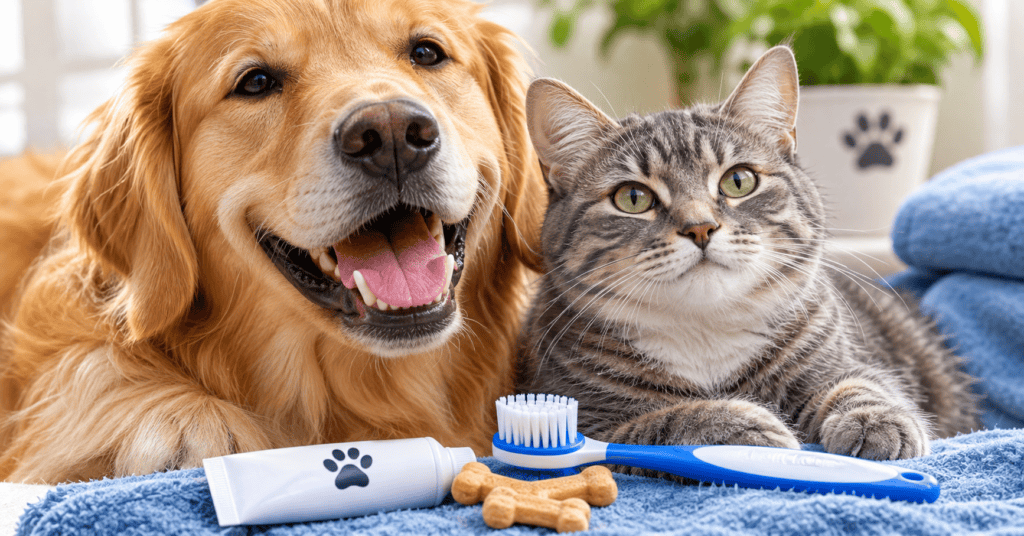
Pet-safe toothpaste
-
A soft-bristled pet toothbrush or finger brush
-
Small rewards or treats
-
A quiet, comfortable environment
-
A little patience
Never use human toothpaste. Some ingredients, including xylitol, can be dangerous to pets.
How to Introduce Toothbrushing
If your pet has never had their teeth brushed, don’t expect them to accept a full brushing session immediately. Introduce the process gradually and at their own pace.
Step 1: Get Comfortable With Touch
Gently touch your pet around their muzzle and cheeks. When they remain relaxed, reward them with praise or a small treat.
Step 2: Introduce the Toothpaste
Allow your pet to lick a small amount of pet-safe toothpaste from your finger. Choose a flavor they enjoy.
Step 3: Introduce the Toothbrush
Allow your pet to sniff and investigate the toothbrush before attempting to brush.
Step 4: Start With a Few Teeth
Gently lift your pet’s lip and brush the outer surfaces of a few teeth using small, gentle motions. You don’t need to force their mouth open.
Step 5: Build a Daily Routine
Gradually increase the length of each session as your pet becomes more comfortable. Daily brushing is the goal, but building a positive experience is especially important when starting out.
If your pet becomes fearful, uncomfortable or resistant, stop and try again another time. Never force the process.
What If My Pet Won’t Let Me Brush Their Teeth?
Not every pet will immediately tolerate toothbrushing. Fortunately, there are additional products that can help support oral health.
These may include:
-
Dental chews
-
Dental wipes
-
Oral health gels
-
Water additives
-
Veterinary dental diets
Look for products accepted by the Veterinary Oral Health Council (VOHC), which evaluates evidence supporting plaque or tartar control.
Not sure which products to choose? Explore the Veterinary Oral Health Council’s list of accepted dental care products for dogs and cats.
Small Dogs Need Dental Care, Too!
Small breeds, including Yorkshire Terriers, Chihuahuas, Maltese and Toy Poodles, are particularly prone to periodontal disease.
Their smaller mouths can contribute to dental crowding, making plaque accumulation and dental problems more likely.
Starting a consistent dental care routine early in life is especially beneficial for these pets.
Don’t Forget About Your Cat
Cats need regular dental care just as much as dogs do.
In addition to periodontal disease, cats can develop painful conditions such as tooth resorption and gingivostomatitis.
Use products specifically formulated for cats, introduce brushing gradually and speak with your veterinarian about the best approach for your individual pet.
Warning Signs of Dental Disease
Contact your veterinarian if you notice:
-
Persistent bad breath
-
Red, swollen or bleeding gums
-
Yellow or brown tartar buildup
-
Excessive drooling
-
Loose or broken teeth
-
Dropping food while eating
-
Chewing on only one side of the mouth
-
Pawing at the face or mouth
-
Facial swelling
-
Changes in appetite or behavior
If your pet is showing signs of oral pain, have their mouth evaluated before attempting to begin a brushing routine.
When Is Professional Dental Care Needed?
Even with excellent at-home care, pets may require professional dental cleanings.
A comprehensive veterinary dental procedure performed under anesthesia allows your veterinary team to examine the mouth, clean above and below the gumline, obtain dental radiographs and address painful or diseased teeth when necessary.
Your veterinarian can recommend an appropriate dental care schedule based on your pet’s age, breed, medical history and oral health.
Small Steps. Healthier Smiles.
You don’t have to create the perfect dental care routine overnight. Start with small, manageable steps and celebrate your pet’s progress.
A few moments of daily care can help protect your pet’s comfort, oral health and quality of life.
Have another pet health question you’d like us to cover? We’d love to hear from you!
Healthy Pets. Happy Families.
Your Pet Health Academy Team
Powered by Pet’s First Choice
This article is intended for educational purposes and is not a substitute for individualized veterinary advice. Always consult your veterinarian regarding your pet’s specific healthcare needs.
