
Why Is My Dog Losing Hair?
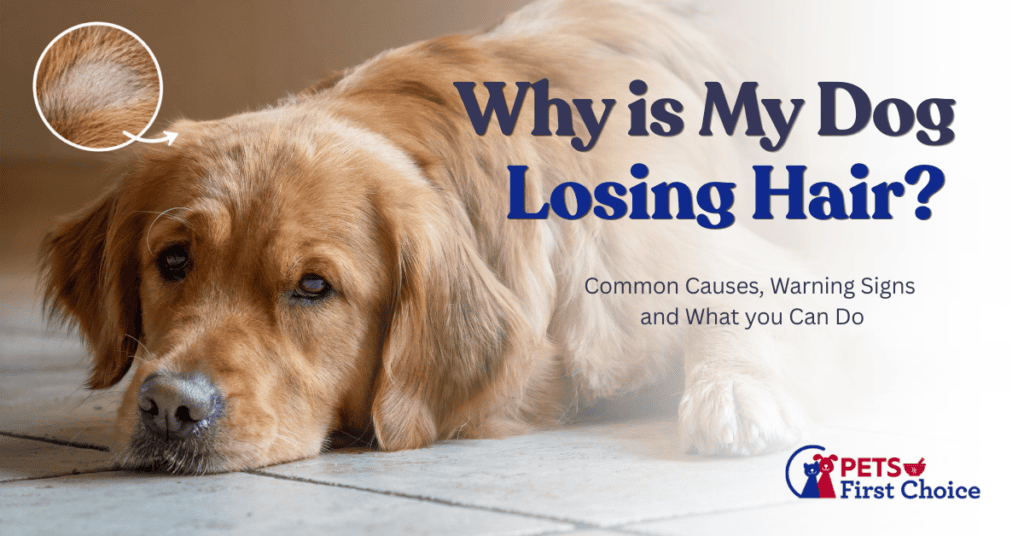
Allergies in dogs are one of several common reasons pet owners may notice excessive shedding, thinning fur, or bald patches on their dog’s coat. If you’ve found yourself asking, “Why is my dog losing hair?”, the answer can range from relatively simple issues such as fleas or environmental allergies to infections or underlying health conditions that require veterinary care.
Understanding the potential causes of dog hair loss can help you recognize when something has changed and determine when it’s time to contact your veterinarian.
When Is Dog Hair Loss a Concern?
Some shedding is completely normal. Many dogs naturally shed throughout the year, while others experience heavier seasonal shedding as temperatures and daylight hours change.
Hair loss becomes more concerning when you notice unusual changes such as dog bald spots, significant thinning, irritated skin, sores, excessive scratching, or a dog losing patches of hair.
Pay attention to where the hair loss occurs and whether other symptoms appear. These details can help your veterinarian determine the underlying cause.
1. Dog Skin Allergies
Dog skin allergies are a common cause of itching and coat problems. Dogs can react to environmental allergens such as pollen, grass, mold, and dust mites. Some dogs may also experience reactions associated with certain foods or flea bites.
Unlike people, who may primarily experience sneezing or watery eyes from environmental allergies, dogs frequently develop skin-related symptoms.
Common dog allergy symptoms may include:
- Persistent scratching
- Red or irritated skin
- Paw licking or chewing
- Frequent ear problems
- Rubbing the face
- Excessive grooming
- Hair thinning or bald areas
When you notice your dog losing hair and itching at the same time, allergies are one possibility worth discussing with your veterinarian.
2. Fleas and Flea Allergy Dermatitis
Fleas are another potential cause of dog hair loss, particularly when a dog is sensitive to flea bites.
Some dogs develop flea allergy dermatitis, an allergic reaction to proteins in flea saliva. Even a small number of flea bites can trigger intense itching in sensitive dogs.
Dogs may scratch, lick, or chew themselves repeatedly, eventually damaging the skin and pulling out fur. Hair loss may be especially noticeable around the lower back, tail base, and hindquarters.
Consistent veterinarian-recommended flea prevention can help reduce flea exposure and the skin problems associated with infestations.
3. Skin Infections
Bacterial and fungal infections are other dog skin problems that can affect the coat.
Skin infections may develop on their own or occur after repeated scratching damages the skin barrier. Warm, moist areas can be particularly vulnerable to bacterial or yeast overgrowth.
Depending on the cause, you might notice redness, odor, flaky skin, crusting, bumps, discharge, or dog bald spots.
Because different infections require different treatments, your veterinarian may need to examine the skin or perform diagnostic testing before recommending medication.
4. Parasites and Mange
External parasites aren’t limited to fleas. Certain mites can cause mange, which may result in itching, inflammation, scabbing, and a dog losing patches of hair.
There are different types of mange, and symptoms can vary depending on the mite involved. Some conditions can also spread between animals.
If your dog suddenly develops significant hair loss, intense itching, crusty skin, or rapidly expanding bald areas, schedule a veterinary examination rather than attempting to diagnose the problem at home.
5. Excessive Licking and Scratching
Sometimes the immediate reason for missing hair is mechanical: your dog is repeatedly licking, biting, or scratching the same area.
The bigger question is why.
Allergies in dogs, fleas, infections, parasites, pain, and other sources of discomfort can all lead to excessive grooming. Repeated licking can further irritate the skin, creating a cycle of itching, inflammation, and additional hair loss.
Stopping the scratching alone may not solve the problem. Identifying what is causing the behavior is essential.
6. Hormonal or Medical Conditions
Not every case of hair loss begins with an itchy skin condition.
Certain hormonal and metabolic disorders can cause coat thinning or symmetrical hair loss, sometimes without significant scratching. Changes in energy, appetite, thirst, weight, or skin appearance alongside hair loss may provide additional clues.
This is one reason persistent dog hair loss deserves veterinary attention, even when your dog doesn’t appear uncomfortable.
Your veterinarian may recommend bloodwork or other tests if an underlying medical condition is suspected.
What Should You Do If Your Dog Is Losing Hair?
Start by examining your dog’s skin and coat. Look for fleas, redness, bumps, scabs, wounds, odor, or changes in skin color. Consider when the problem started and whether you’ve recently changed your dog’s food, grooming products, medications, or environment.
Avoid applying human medications or skin products unless instructed by your veterinarian. Products that are safe for people aren’t necessarily safe for pets.
If your dog is losing hair and itching, developing sores, experiencing widespread hair loss, or showing other signs of illness, contact your veterinarian. Early diagnosis can help prevent some dog skin problems from becoming more uncomfortable or difficult to manage.
Help Keep Your Dog’s Skin and Coat Healthy
So, why is my dog losing hair? There isn’t one universal answer. Dog skin allergies, fleas, parasites, infections, excessive licking, and underlying health conditions can all contribute to changes in your dog’s coat.
Regular grooming, appropriate parasite prevention, balanced nutrition, routine veterinary care, and paying attention to changes in your dog’s skin can all support long-term skin and coat health.
At Pets First Choice Rx, we’re committed to helping pet parents care for their dogs with trusted prescription medications, parasite preventatives, skin-care products, and wellness solutions. If your veterinarian identifies the cause of your dog’s hair loss, follow their recommended treatment plan and give medications exactly as directed.
For trusted pet wellness products, visit PetsFirstChoiceRx.com.
Have Questions About Your Pet’s Medications or Supplements?
The pharmacy team at Pet’s First Choice can help answer questions about medications, supplements, administration, storage, and products recommended as part of your pet’s care plan.
Ask Our Pharmacist
803-834-3183
info@petsfirstchoicerx.com
Pet Health Academy content is provided for educational purposes and is not a substitute for veterinary diagnosis or treatment. Contact your veterinarian with concerns about changes in your pet’s health. Difficulty or inability to urinate can be an emergency and requires prompt veterinary attention.
